

You may recall that I reviewed the SMSLaser XK68-IR in a previous post. The XK68-IR was an interesting attempt at converting a budget white light device to IR, and while it overall missed the mark, it was a good enough try that I felt SMSLaser had some promise and was a company worth watching.
Well, fast forward a year from the review, and SMSLaser has sent me a new device to test and evaluate: the HFXC. The HFXC is a 4-in-1 device that combines a white light, IR light, IR aiming laser, and visible aiming laser. You don’t really see a lot of 4-in-1s that are popular because they tend to do something badly (generally the illuminator(s)). As you’re going to find out, SMSLaser did their homework in a big way on this device, and I think it’s going to surprise you.
Conflict of Interest Disclaimer: SMSLaser sent me this device for free after I requested it. They had linked my (not entirely complimentary) review of the XK68-IR on their website. I was not given any PR materials or expectations for this review. I told SMSLaser I would write a fair review of the HFXC, and this is that review. If I like the device, I’ll probably buy another. However, getting free stuff always causes reviewer bias, and I’m hardly immune to that. Caveat emptor and all that.
Price: $245 (but, again, got my review device for free).
Warranty: One year. Not particularly great, but also about in line for the market segment.
Aesthetics: The HFXC makes a nice impression right out of box. It comes in a hard case with a remote switch.

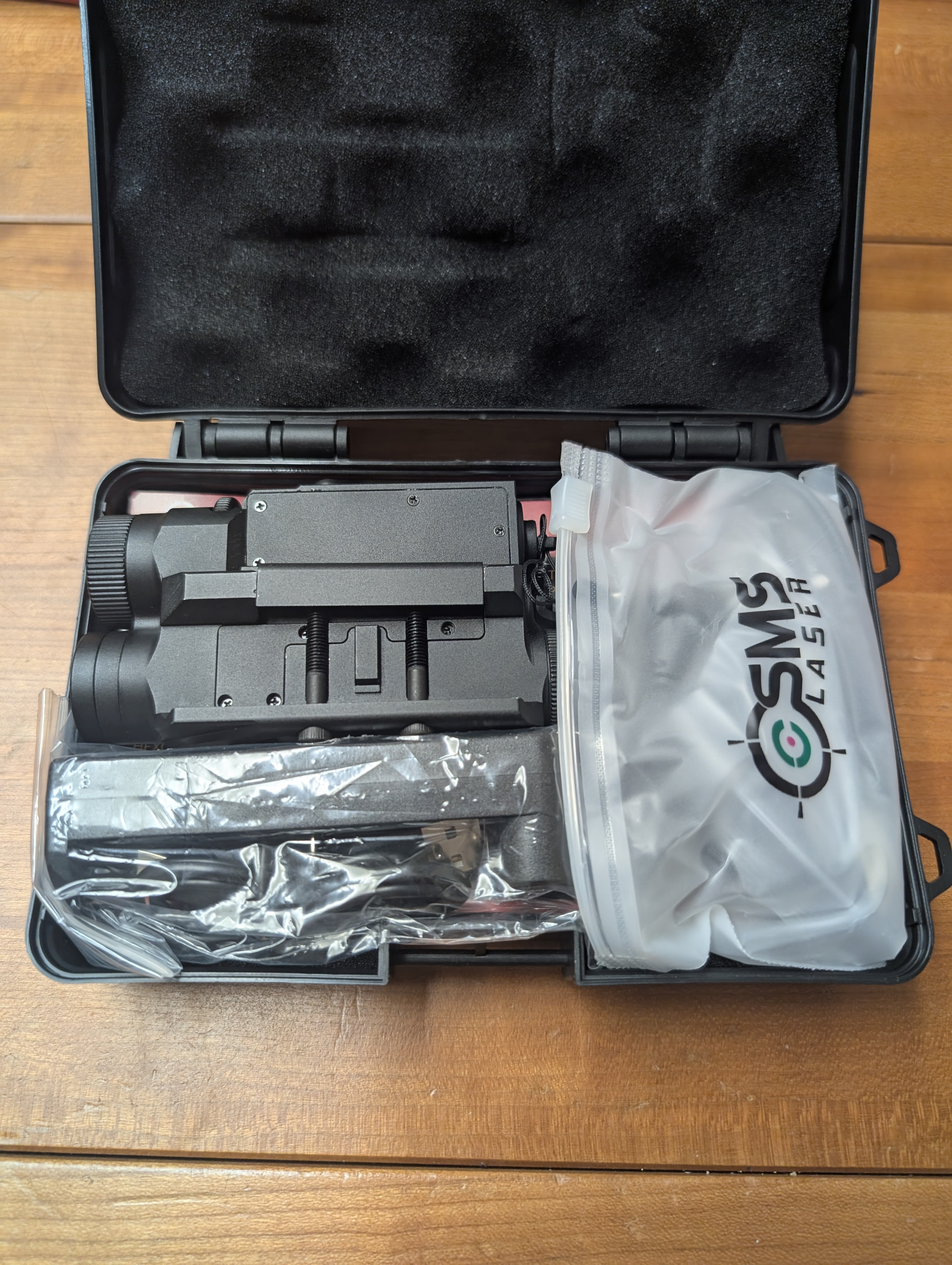
I wouldn’t suggest beating the snot out of the case, but it’s better than a plastic baggie. I’d think that a nice label on top would improve presentation slightly, but that’s a very minor nitpick.
The HFXC itself is extremely appealing. It’s made of aluminum (no type listed), and has a side-by-side laser and illuminator design. The anodized finish was also pretty clean, and I found the battery (18500) compartment cap to turn with just the right amount of force. The only omissions I noticed were the lack of markings for the POI adjustment on the turrets and an indicator for the battery polarity (positive towards front). The other controls were clearly marked, so it’s a surprising oversight.
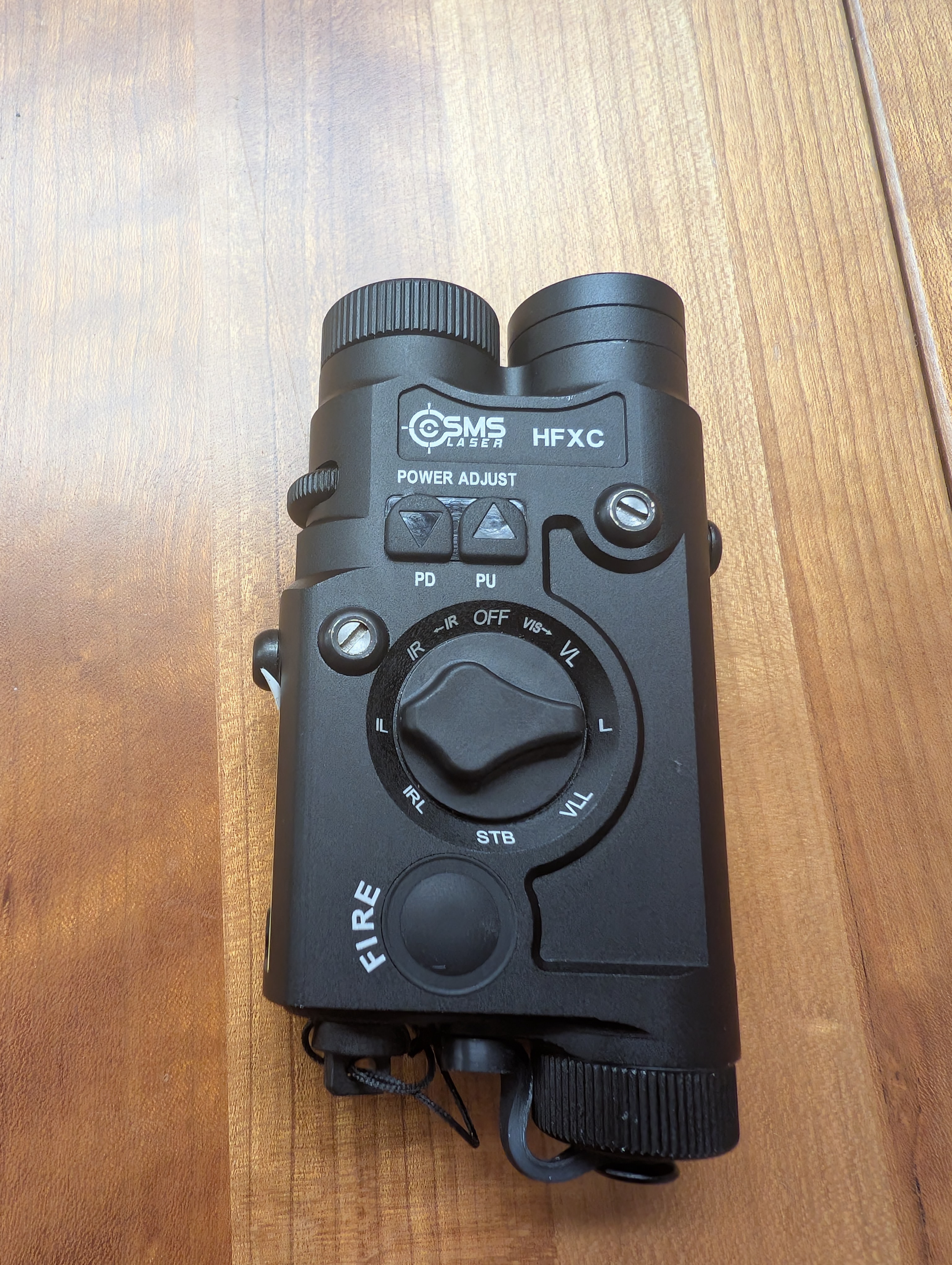

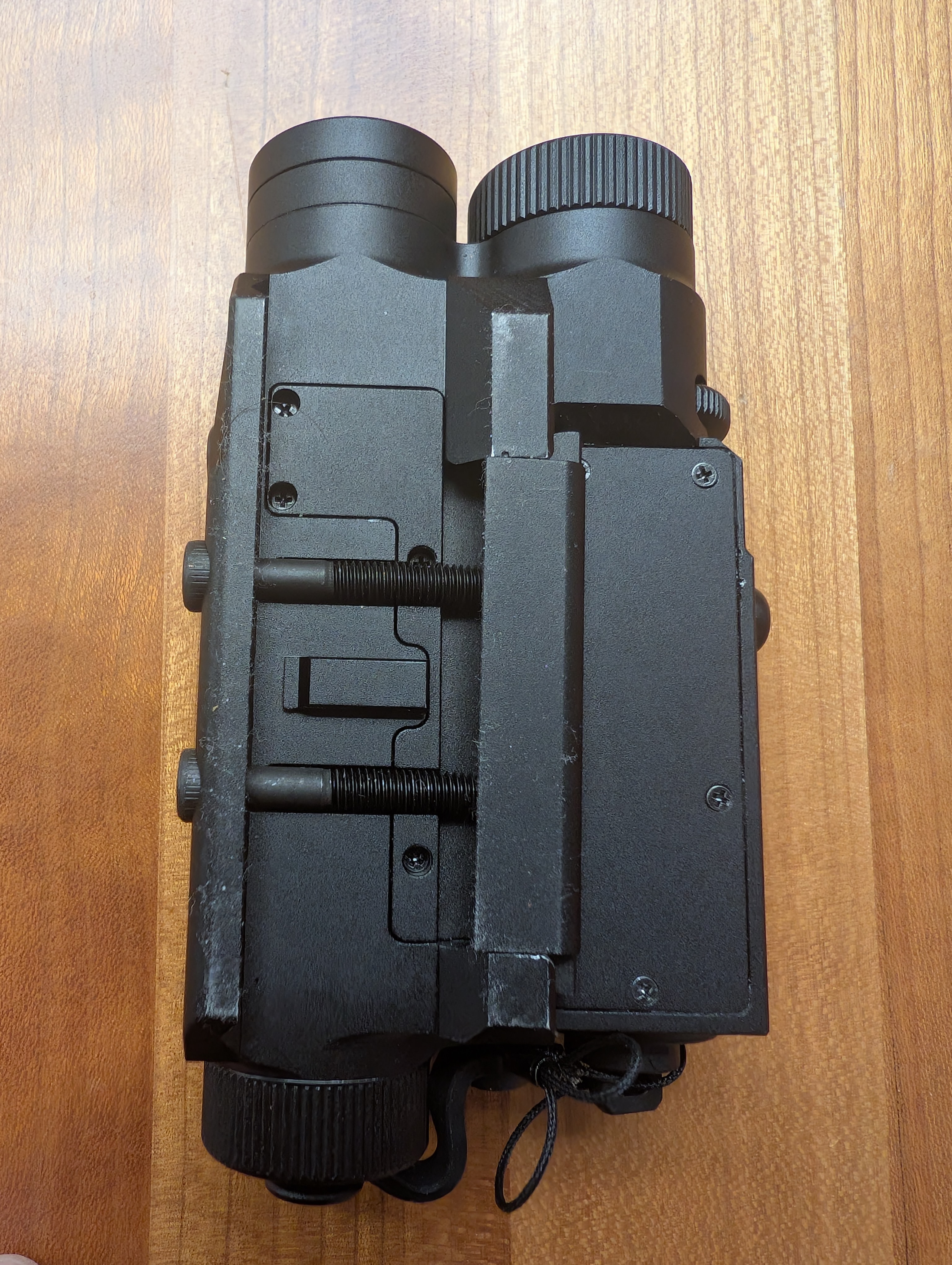
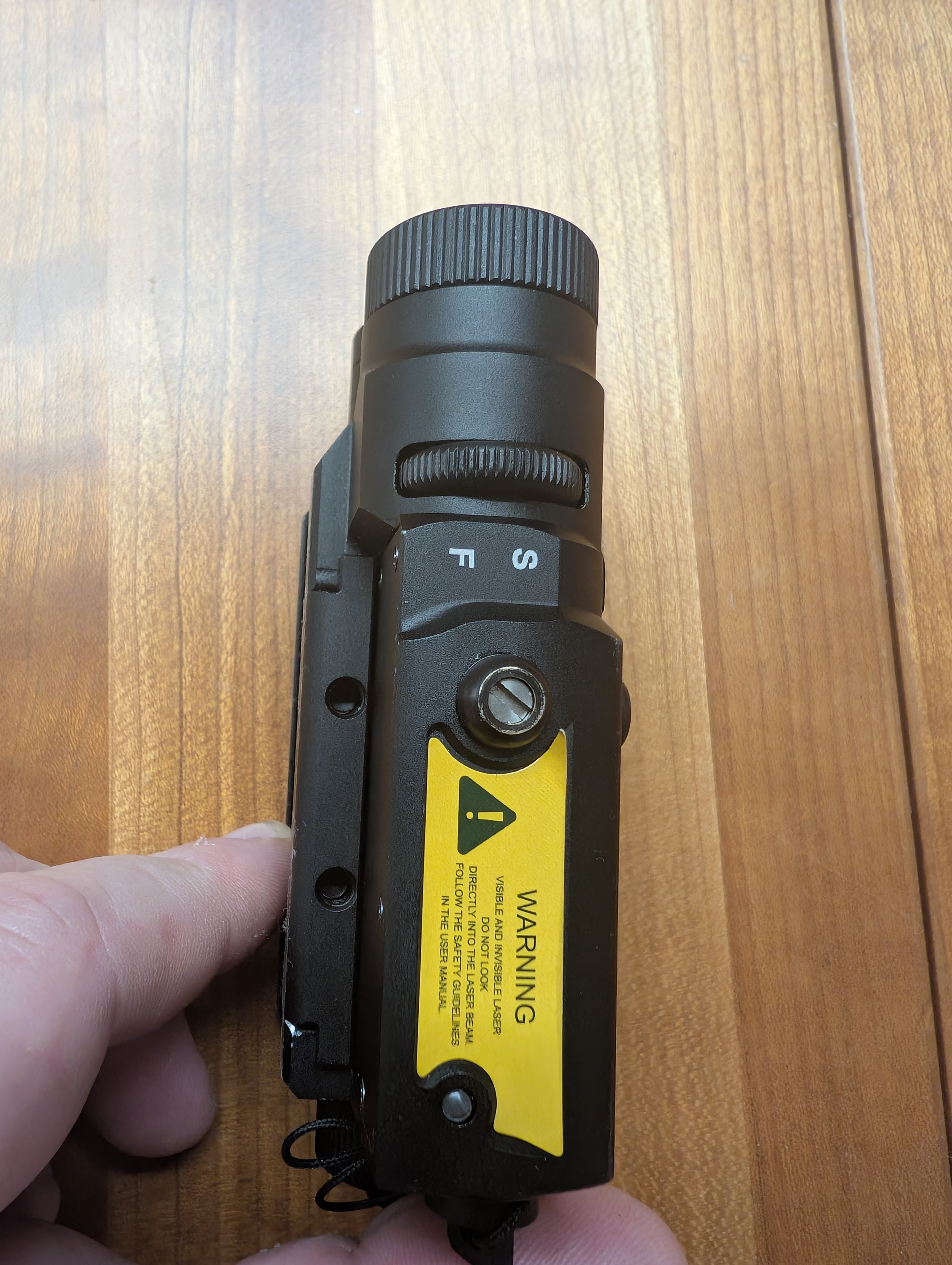


Both the battery and Crane port have retention mechanisms. The battery uses a rubber lanyard thing, somewhat like a PEQ-15. The crane port uses what appears to be a piece of cord. I am a little skeptical of the cord’s durability, and would like to see wire in the future. That said, it’s still working, and that port is probably never going to go unused (by me), so not a huge deal. I will say that it is slightly odd that they chose to put the battery in-line with the lasers – this makes it a bit hard to swap batteries without pulling your remote switch if both are top-mounted. In the future, I’d switch the two, if it’s possible.
Size-wise, it’s about the same size and weight as a PEQ-16. This seems fine to me. It’s hard to fit a useful white light in a smaller package due to reflector size issues.
You’ll notice that the mount has a recoil lug, which is a nice touch. It sits much lower than the XK-68IR does, so you don’t see much of it even with an absolute co-witness mount optic. This mount is a critical improvement, which I’m glad to see.
The selector is a little ugly, but it works, and that’s the important thing. I’d encourage SMSLaser to design a newer one at some point.
Unlike the XK68-IR, there’s a little LED on the side showing that the HFXC has been activated. This is an important safety feature, and I’m glad to see SMSLaser implemented it.
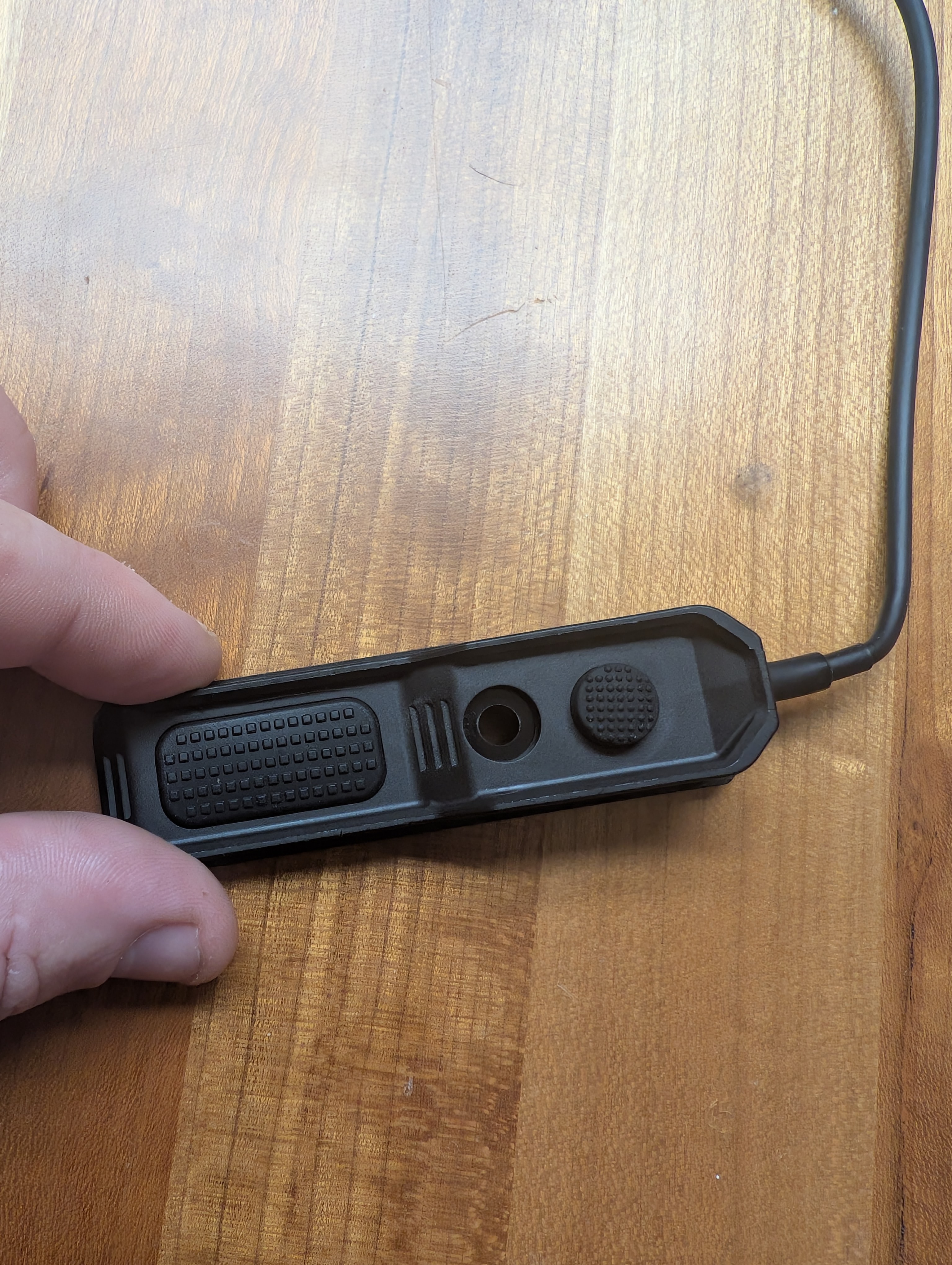
The remote is a little bit flimsy feeling (much like the original XK68-IR’s), but the addition of a direct MLOK mount was a smart idea. And, of course… that’s a Crane plug you see, which is something we’ll talk about a little later.

Controls: The controls are overall pretty good. The HFXC itself uses a pair of coin turrets for controlling the laser and illuminator zeroes. The turrets are firm, with audible clicks. You could make an argument that the illuminator should just use finger-turn turrets like the LA-5B does, but again, very minor nitpick territory. I did find it somewhat annoying that the turrets were just slightly too small length-wise for me to use my Holosun adjustment tool, which I cart around on my keychain for situations like this. SMSLaser includes a screwdriver in their package, so this isn’t a big deal either, but if they could be a skosh bigger, that would be nice.
The illuminator and laser power are controlled by a pair of buttons near the front of the device. These have up and down arrows on them, and I found them intuitive to use. You won’t have to click more than a few times (five, I think) to get the power level you want. I like this better than selecting power level via the mode selection dial, which doesn’t give you much in the way of granularity.
The selector dial is ugly, but it’s workable. The lack of really firm “clicks” between the modes made it somewhat unreliable to select during the dark – it was too easy to move it past what you wanted. The modes themselves are wildly better than what were on the XK68IR. Vis modes on the right, IR modes on the left, and a sensible off button at the top. There’s a strobe mode on the bottom. I don’t think strobe is useful and would prefer a second off position, but at least this appeases misguided strobe enthusiasts without inflicting it on everyone else. (ETA (1/7/2025: strobe mode is replaced by a second off in the current version of the HFXC.)
Now, one thing that the HFXC absolutely nails is the off mode behavior. A lot of cheap Chinese multi-function aiming lasers (MFALs) have a behavior where if you use constant-on, turn the MFAL to the off mode, and then turn the MFAL to a vis or IR mode, the MFAL goes back to emitting without pushing any buttons. Well, with the HFXC, if you turn it to off, it stays off until you invoke momentary or constant-on again. This might seem like a minor detail, but improper implementations can cause IR or white light negligent discharges, so big kudos to SMSLaser on getting this right.
The focus wheel for the IR illuminator is good, but it does take a little bit of spinning to fully dial it in – this isn’t like a PEQ or NGAL where it’s pretty quick. I don’t personally mess with these things much, so I can accept that. If a future version could figure out a mechanism for stiff 90 degree lever, that would be an improvement, but I don’t think it’s a deal-breaker
The fire button… the fire button is good, with one exception. Click to constant-on, hold to momentary. It’s big enough to hit easily if you can find it. The problem with it is that it’s not textured at all, so finding it is not always intuitive. I definitely found my thumb searching for it when I tried using it in the dark.
Well, you don’t need the fire button if you use a remote switch. The remote switch that comes with the HFXC has constant-on and momentary buttons, and nicely enough, you can partially depress the constant button for momentary. It seems to work well enough when top-mounted. The really good news here is that if you hate the included remote switch, you can replace it with any Crane-compatible switch like a Modbutton or Axon SL because the HFXC has a Crane port. This is a big deal, and a very valuable feature.
One last thing about the controls… the HFXC has power limit modes that you can invoke by holding down buttons while screwing in the battery cap. These are not super intuitive to execute, but if you want to give the HFXC to someone else and don’t want them to be wielding a lightsaber, it gives you some options.
Technical Analysis: The HFXC is challenging to review because it’s a 4-in-1, and there’s a lot to cover. Let’s check out the raw specs as listed:
- Coaligned green and IR lasers, supposedly 30mw each.
- 1k lumen, 80k candela (!) white light
- 80mw IR illuminator focusable from 17mrad to 120 mrad
This is the equivalent of claiming the HFXC has a PEQ-15’s lasers, a Cloud Defensive REIN 2.0 white light, and an NGAL’s IR illuminator. Look, I love that SMSLaser is trying to do all of this, but that’s a heck of a claim to make at a ~$250 price point.
The first thing I checked out was the white light. I’ve got a series of comparison photos I took in my backyard.


The bad news is, there’s no way this is an 80k candela white light. It’s more like 30k-40k, which is more like what you’d expect from a reflector of that size. The good news is that the HFXC is still more than usable for putting a lot of light pretty far down range, and really sets the standard for a device like this. It handily outperforms the GL4 Pro and TLR-1 HL. It’s not as good as a PLHv2, but it’s much closer than I expected. The combination of spill and hot spot is pretty good. It’s not super floody at all. I would legitimately feel comfortable in most low-light situations with just the HFXC’s white light.
The IR and vis lasers were definitely lightsabers on maximum power, but were more reasonable when dialed down. I don’t have trouble believing they’re 30mw lasers at max.
As for the IR illuminator, there’s a lot to go over here here:
- It gets extremely bright, depending on how you focus it.
- The focus function works pretty well. You can dial it down to almost laser-like focus, but also open it up to a reasonably large hot spot.
- There’s no flood/diffuser function, which some people are going to dislike (see below). This would presumably be some sort of flip cap assembly if SMSLaser wanted to do one later on. (Speaking of which, a flip cover accessory for the lasers would be nice, too.)
- It can be independently tweaked to line up with your IR laser.
- It is not a super clean circle, I assume due to the reflector design. This is less of a problem in real life than test photos.
- All in all, it’s a very solid IR illuminator.
I took some photos of the IR modes with a Sionyx Aurora.
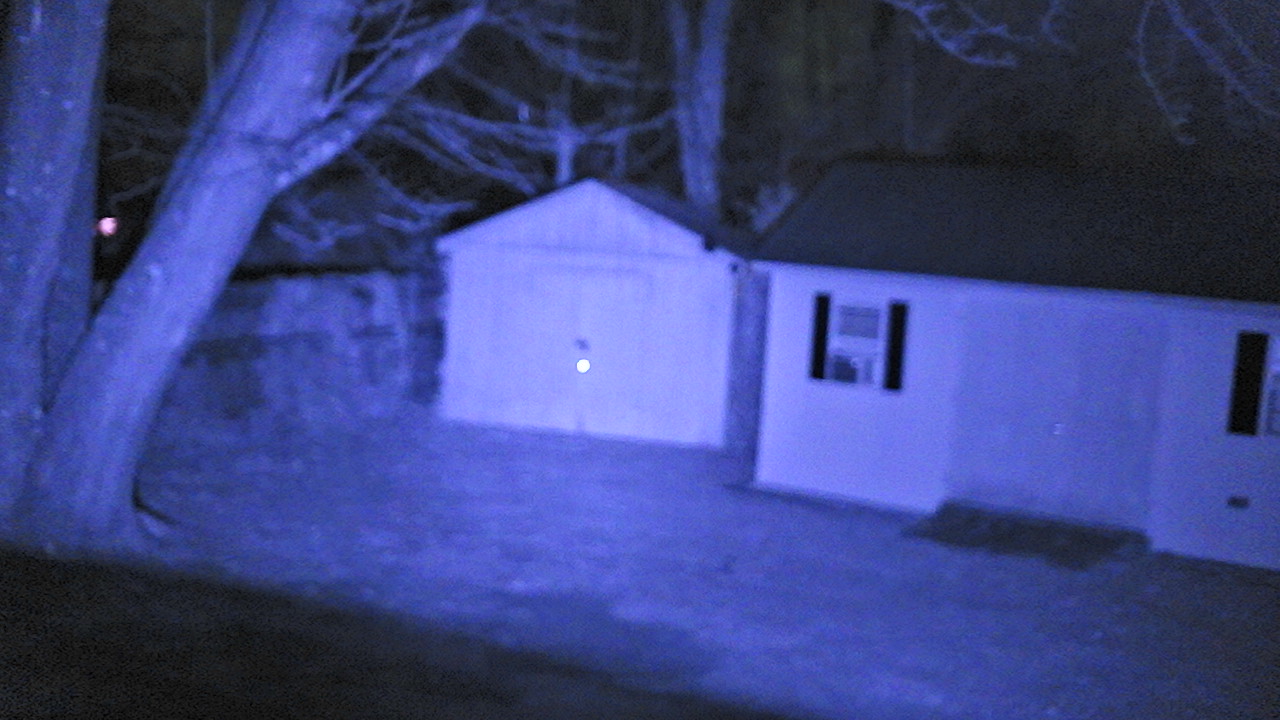


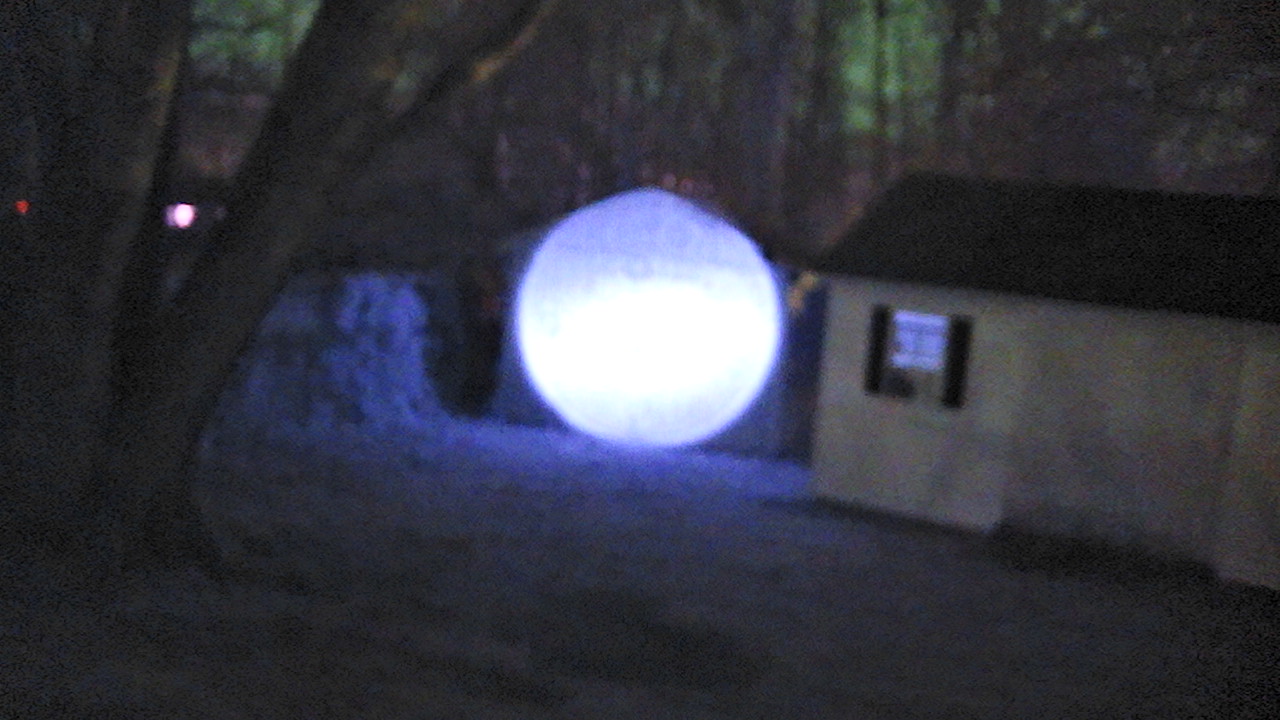
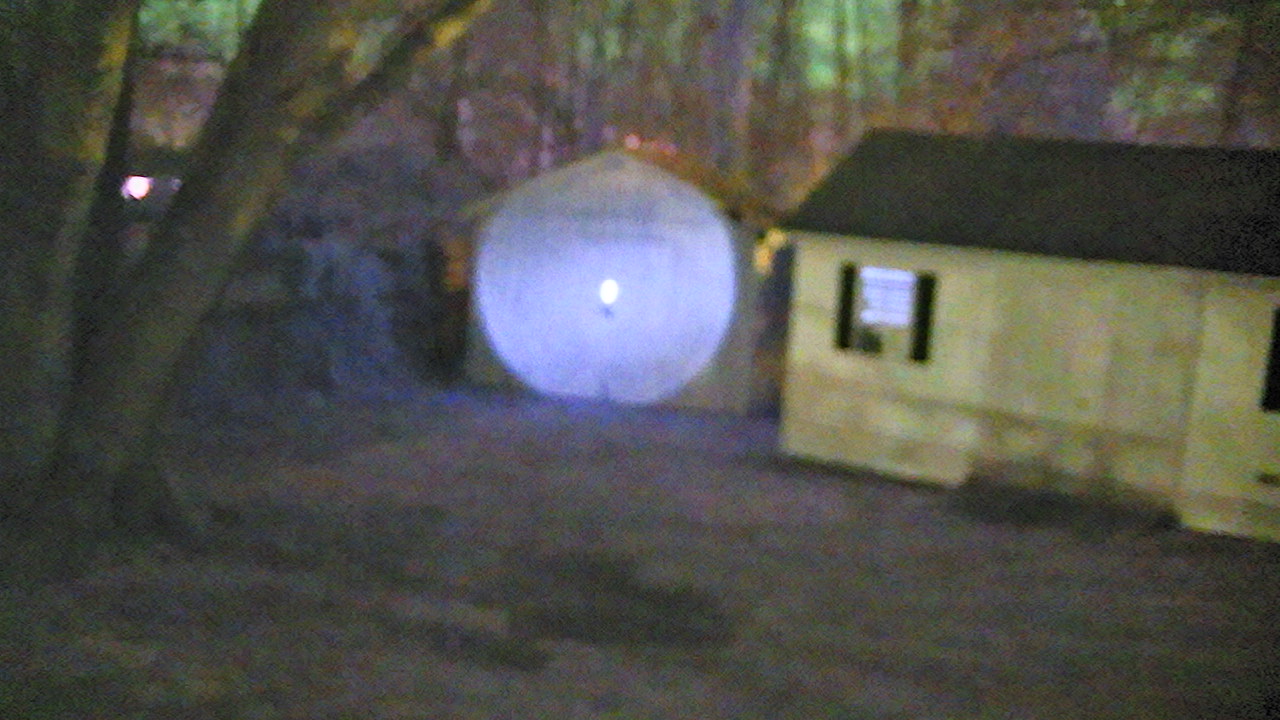



As you can see, the IR illuminator is very focused in general, and doesn’t have much spill. The GL4 Pro shot I took shows what a greater degree of spill looks like. Generally speaking, minimal spill on “real” rifles is preferable to me. I’m sure other people have other opinions, but if I need to shoot at 50-100 yards, I need a bright hot spot, not a huge amount of flood creating shadows. PCC and pistol users who are focusing on the 50-and-in space might prefer flood. Thankfully, you’ve got choices.
One flaw with the modes – and this is a more serious one – is that the illuminator + laser settings give you no ability to control the power of the illuminator and laser separately. That means that if you want your illuminator at max power, you’re forced into using your laser at maximum power, and let me assure you: these lasers are not eye safe at maximum power. That is not necessarily what you really want. I would have loved to have seen either the illuminator + laser modes remember your illuminator and laser powers, or some sort of way to program them separately (perhaps hitting both buttons simultaneously to select, or something along those lines). Barring that, even just ditching strobe and having a pre-set “high IR illuminator, just-enough-power IR laser” mode like M6TR-CHS has would be good. (ETA (1/7/2025: this problem is resolved in the current version of the HFXC.)
The lasers are in-line with the bore. This means that the HFXC looks offset when mounted. This is not aesthetically pleasing, BUT it is functionally a great decision. In-line lasers mean that you can avoid the windage offsets with laser use at further distances, and you’re far more likely to make hits with just simple holdover/hold-under.
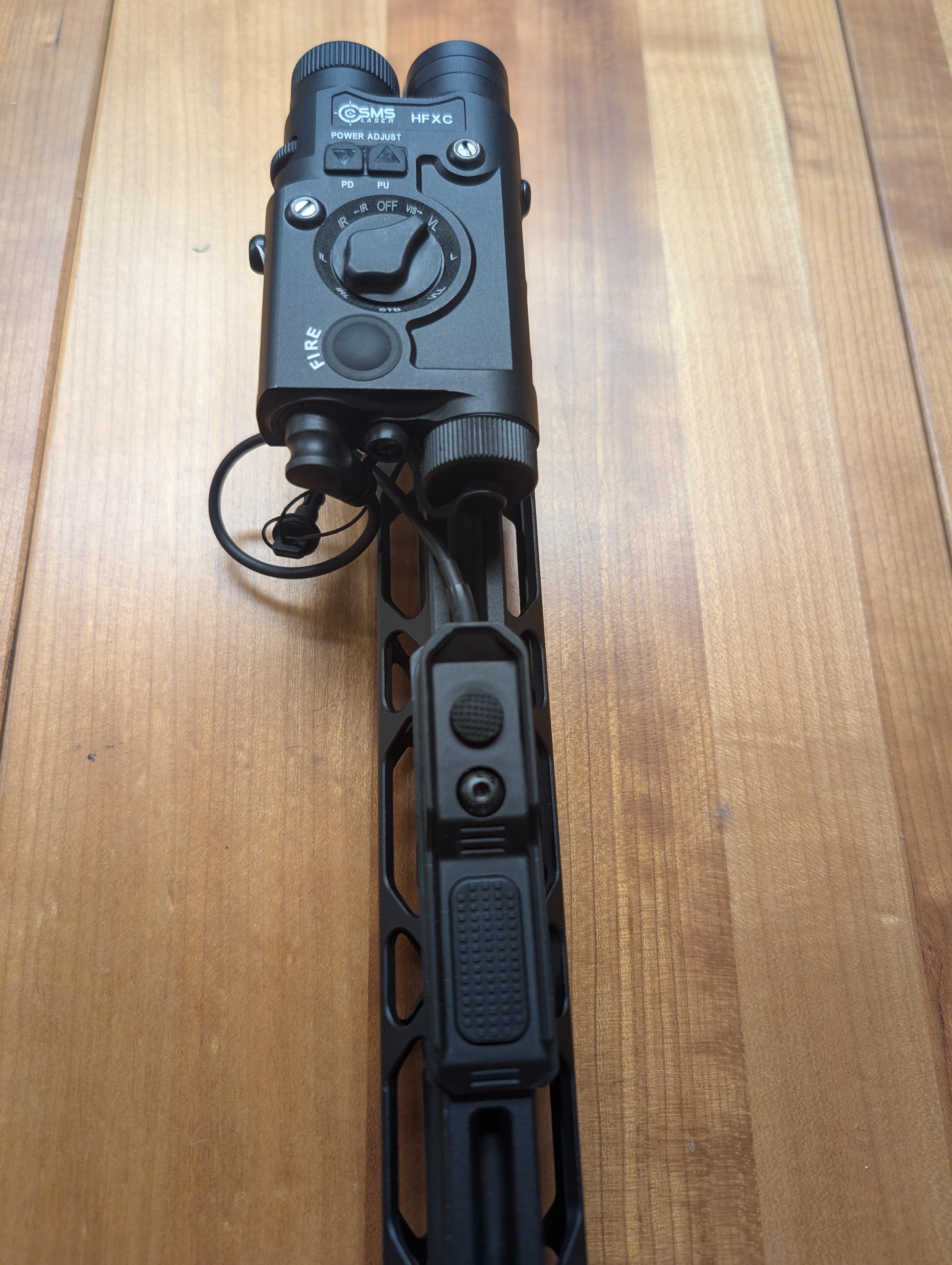
The downside to inline lasers – and why the PEQ-15, NGAL, and so on don’t use them – is that they don’t work with fixed front sights when top-mounted. If you have a fixed front sight like an M16A2 or AK, you will need to side mount the HFXC in order to use it. It should clear most BUIS, but YMMV.
One other technical note: this device uses 18500 batteries, not the more common 18650s. This isn’t the end of the world – you can buy 18500s for about four bucks a pop off Amazon – but I know a lot of people would like to just use 18650s. SMSLaser has teased an 18650 battery cap that will expand out the unit’s length, but provide that battery commonality if that’s a requirement for you.
Testing: I decided to put the HFXC on a spare 5.56 upper that had a Vortex Razor RDS and a Leupold D-EVO on it. The Vortex Razor RDS is not NV compatible, and you’re never going to use a D-EVO with NV either, so adding the HFXC gives me some night-fighting capability I didn’t have before. I took some extra time to loc-tite the mount screws (note to SMSLaser: loc-titing the screws at the factory would be a good idea).
When testing a MFAL, you need to be 100% sure that the mounting platform you’re using is solid. I’ve lost track of the number of “lost zero” stories on the Internet that ended with “and then I realized my handguard was loose” or “I hadn’t torqued the mount enough”. Even a solid handguard is subject to some degree of deflection if you hit it hard enough. I frequently checked both the handguard and the HFXC throughout testing.
The plan? Shoot it a bunch under white light and NV, and see how it handles some real-steel recoil. In theory, the HFXC is tested to 7.62×39 recoil, so my boring 5.56 recoil shouldn’t be a problem at all.
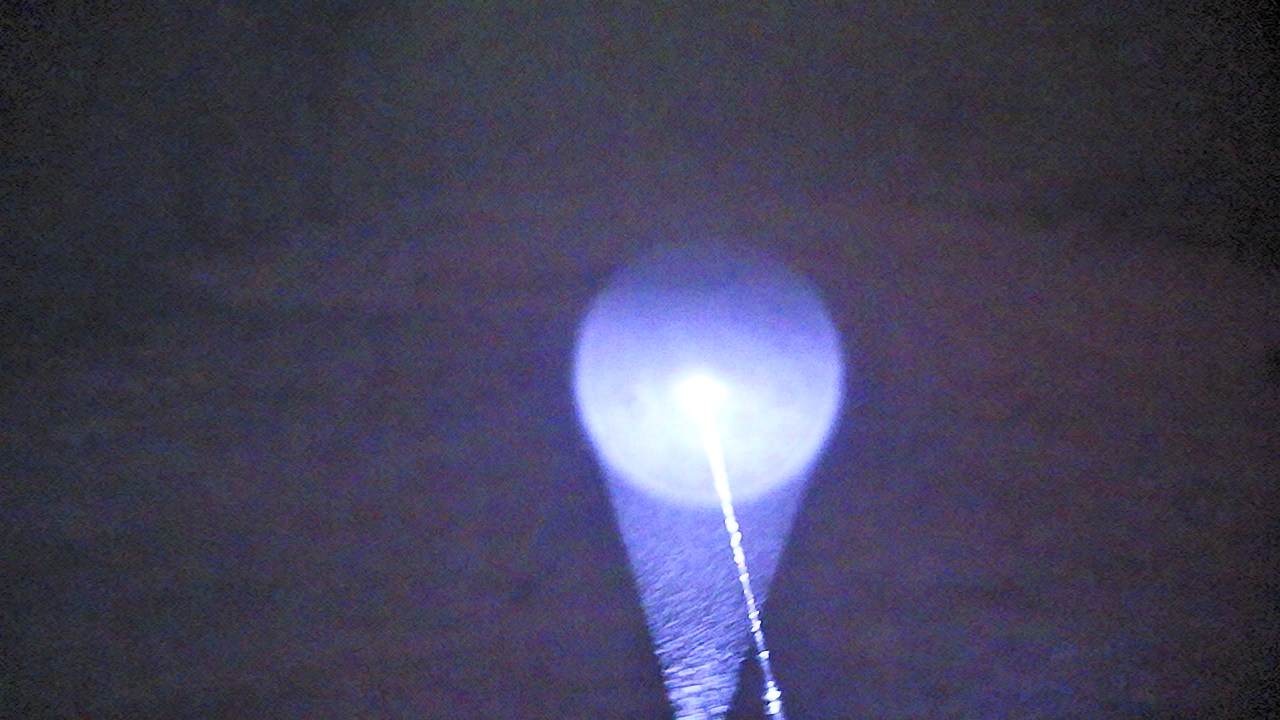
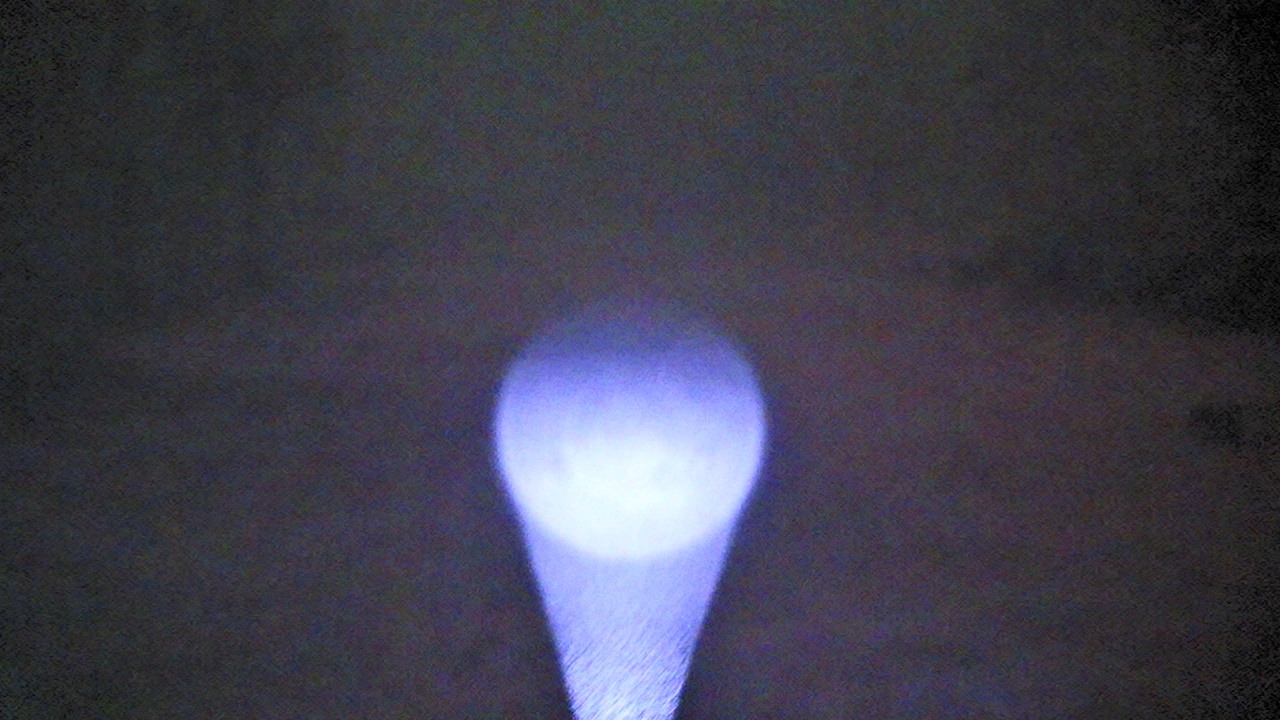
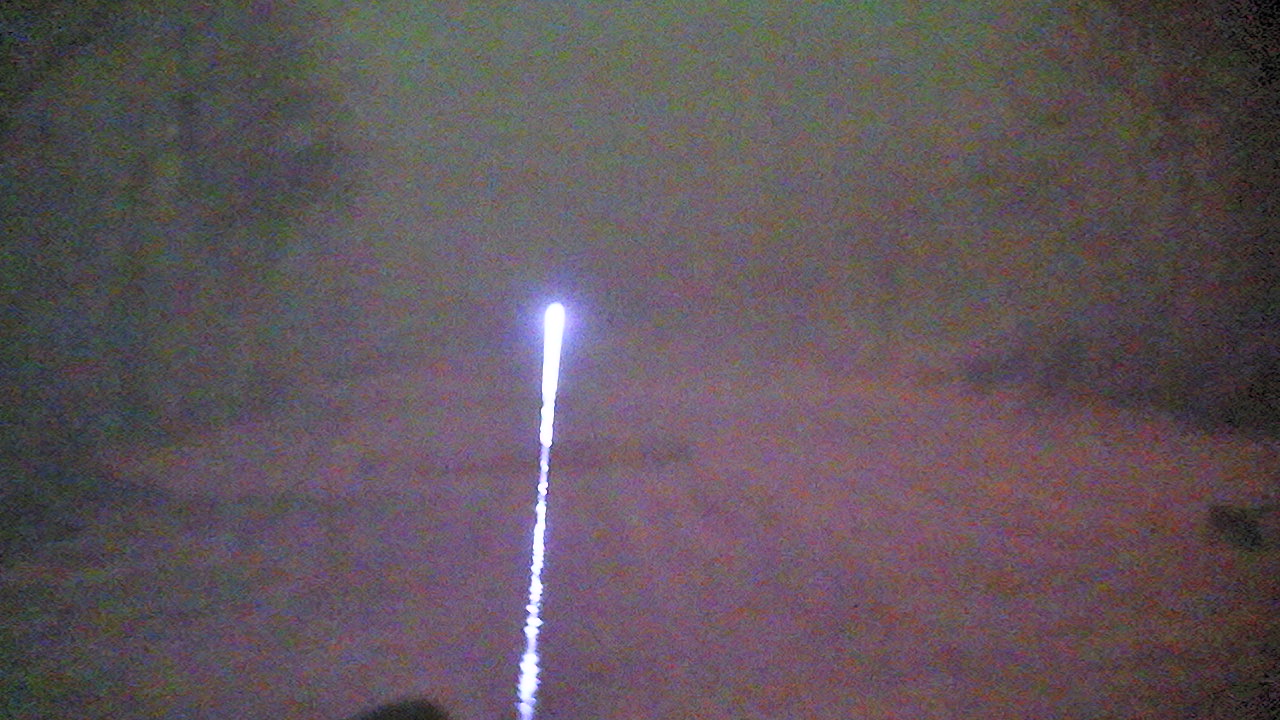
On my first outing, the weather was absolutely awful – a misty fog that stopped white light cold at 15 yards, and made IR illuminators basically useless. The HFXC’s lasers had enough juice to cut through the mist, though. I shot about a magazine through the rifle, and when I got home, the visible laser was in precisely the same spot I left it relative to the red dot. Very encouraging. No flicker or other problems, either.
That said, I did take some pictures, which aren’t representative, but show decent IR performance in horrible conditions:

On my next outing, things were a lot better. We were out on the 200yd range, and started the evening off with some daylight/sunset shooting. I used the HFXC’s visible laser for this, and after I tweaked it slightly for an infinity zero, it was basically a point and click endeavor. Zero was rock solid through a couple magazines of 5.56. Very impressive!
When night fell, I was able to do some run-and-gun. Unlike before, I took a lot of care to use defogging on my eye-pro and night vision, and had a lot more success in avoiding things getting fogged up. Here’s a video taken on a Sionyx – as you can see, not a lot of ambient IR in this range.
My shooting is kind of meh because it was 20f out, and my hands were freezing. On the other hand, the HFXC performed pretty well with just a visible laser zero, and was able to hit the targets without too much drama. I’d give the co-alignment a solid thumbs up for “good enough”, but as with any MFAL, you need to zero that IR laser properly for best results. You can see from the video that the laser is a bit off-center from the illuminator – that’s on me for not spending the time to get it all the way in the middle. Zero seemed to hold here as well.
I did find that I had to focus the illuminator more to get decent brightness performance at distance, which I suppose is not a surprise in retrospect. On the plus side, I did like how I could get the size exactly how I liked, and the concerns I had about illuminator brightness and laser brightness didn’t seem to be all that big a deal.
A Philosophical Note: The real argument against 4-in-1s, especially the ones without a vis override, is that if you’re dialed into an IR mode, you can’t just use white light, and vice versa. In some use cases, that’s a problem. I mean, I guess you could theoretically additionally mount a Cloud Defensive REIN or a Modlite OKW/PLHv2 with an Axon switch in the mix, but I suspect most users will find this to be overkill.
I don’t hold any of that against the HFXC, but it’s something to think about when determining whether it’s appropriate for your use case.
Conclusions: Let me start with saying that it’s hard to gauge long-term durability from testing like this – just the nature of the game. That said, SMSLaser stepped it up with this device in spectacular fashion. Every single critique I had of the XK68-IR was resolved with this product. It’s clear that the SMSLaser team did some deep requirements research, figured out where the competition was lacking, and then delivered a product that redefines the market segment. The HFXC is to rifles what the GL4 Pro was to pistols: a game changer that gives you all the capability you need and remote switch compatibility at a price point under $300. It’s not perfect, but it’s closer than any other budget device I’ve seen so far.
Would I use it for duty purposes? Probably not right now. But if someone’s paying you to shoot with NV and WL in a two way range situation, they should probably be paying for your expensive battle-proven gear, too. For those of who just want reliable gear to shoot in low light, and maybe press into service in a pinch, the HFXC answers the mail. Maybe as time goes on and evidence builds, people will trust the HFXC enough for more serious use, but that’s not something this review can determine.
I highly recommend the HFXC based on my testing. My previous default recommendation for NV users who needed a budget MFAL was a Somogear PEQ-15-alike, but the HFXC has supplanted that. It provides the same capabilities as the Somogear, plus a useful white light and a much more durable housing, and without the stigma of being a “fake”.
One final thought: the HFXC has one area where it could further differentiate from the competition, which is to shrink the mode selector assembly (which is much bigger than it needs to be), shift it to the left some more, and then put a mechanism for mounting an RMR or (preferably) DPP footprint optic on the HFXC right above the side with the lasers. This would allow the HFXC to be an optic mount as well as a very competent MFAL.
I want to thank SMSLaser for giving me a chance to test out this product. It’s really great to see another competent entrant in this space, and I think they’re only a few products away from developing a solid reputation like Laserspeed has in the past few years. Keep up the good work!
Addendum (1/7/2025): HFXC announced that they would be updating the HFXC with the following changes in all new shipping units:
- FIRE button changed to single click instantaneous, 0.3s double click constant light.
- Strobe mode is deleted and changed to OFF to avoid accidentally switching to white light during IR use.
- IRL mode changed the way to adjust the power, customers reacted that they can’t adjust the IR laser individually in IRL mode causing the laser to bloom and affecting the aiming, so we have made the following changes: In IRL mode, you can click the PD button to cycle the IR illuminator power, and click the PU button to cycle the IR laser power.
In my opinion, this update has resolved the most pressing issues with this device.
 The Hebrew Hammer
This review made my buy one last night. Excellently thorough review of a very exciting product.
LikeLike
Great review! Appreciate the time and length you put into all your reviews. I just got my HFXC in the mail today and I’m super impressed with it so far. Looking forward to seeing how it performs over some time and rounds.
LikeLike