I recently procured an InfiRay RH25 (probably the last big purchase I’ll be making for a while!), and it’s a fantastic jack-of-all-trades thermal device for $3500. It can handle the following functionality:
Clip-On
Weapon Sight
Helmet-Mount
Handheld
Personally, I bought it for the hand-held and clip-on functionality, albeit the possibility of helmet-mounting it does appeal for the future. Even though you can use the included dedicated weapon mount for getting it on a rifle, this basically makes the RH25 unusable for handheld and helmet-mount use cases. The preference by the user community is to install a dovetail-style adapter (similar to what you’d use with binocular night vision) to the RH25 so it can quickly be detached and used in different functions. While the dovetail adds a touch of size and weight, it’s negligible.
A while back, Covert Optics had a blowout sale on the Thermx HS1 thermal handheld scanner. The HS1 is no great shakes in terms of thermal performance – 160×120 resolution, 4x magnification, and a 9hz refresh rate. However, at $100-$200, it was a way of getting some thermal capability at a very low price, which is nothing to sneer at, and also takes RCR123As, which is very handy.
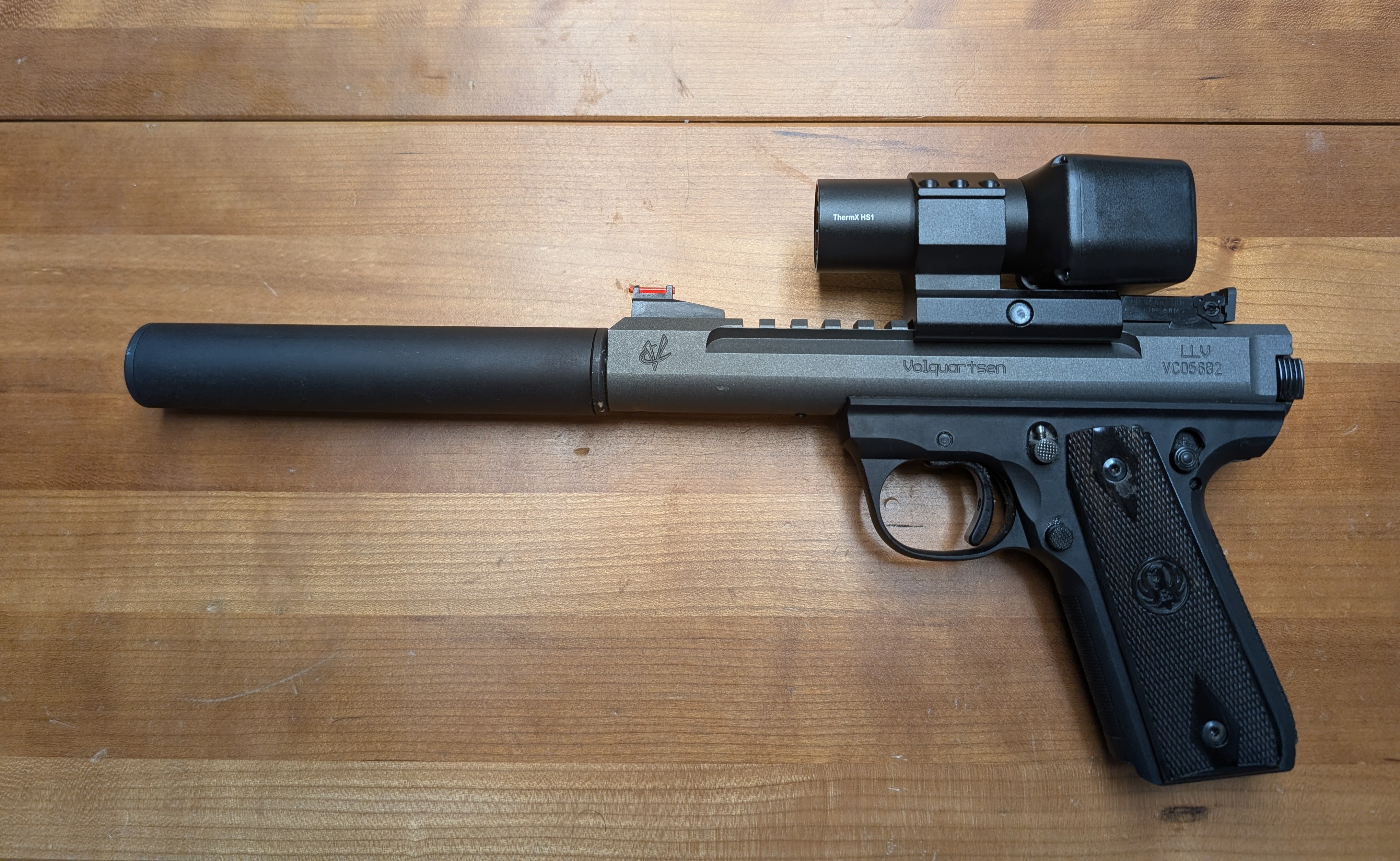
One of the neater capabilities that the HS1 has is the ability to be used as a thermal sight with a reticle. The adjustments are extremely coarse due to the low resolution of the screen – a bit over half an inch per digital “click” at 10yds – so it’s a pistol range solution at best. But its small size also lends itself to that application.
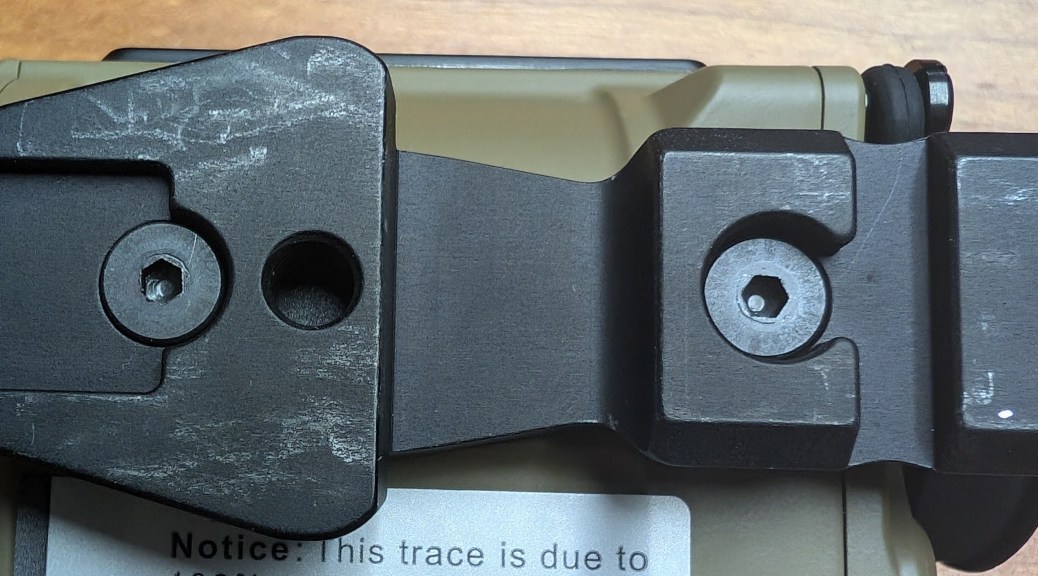
My initial thought was to use it with a 1911, but I was unable to figure out a suitable fixed mounting solution. I then realized I had a spare 22/45 upper, and that this would be a pretty good host for this optic. I bought an inexpensive 30mm low profile mount off Amazon, but any cheap 30mm ring would probably work.
Besides turning the reticle option in the menu, picking your favorite, and zeroing it (I used a laser boresighter), you want to go into the sleep menu and disable dimming and sleep. The HS1 has what I assume is a mediocre-to-bad NETD sensitivity, and you don’t want your sight going any darker than it has to. Similarly, make sure brightness is high.
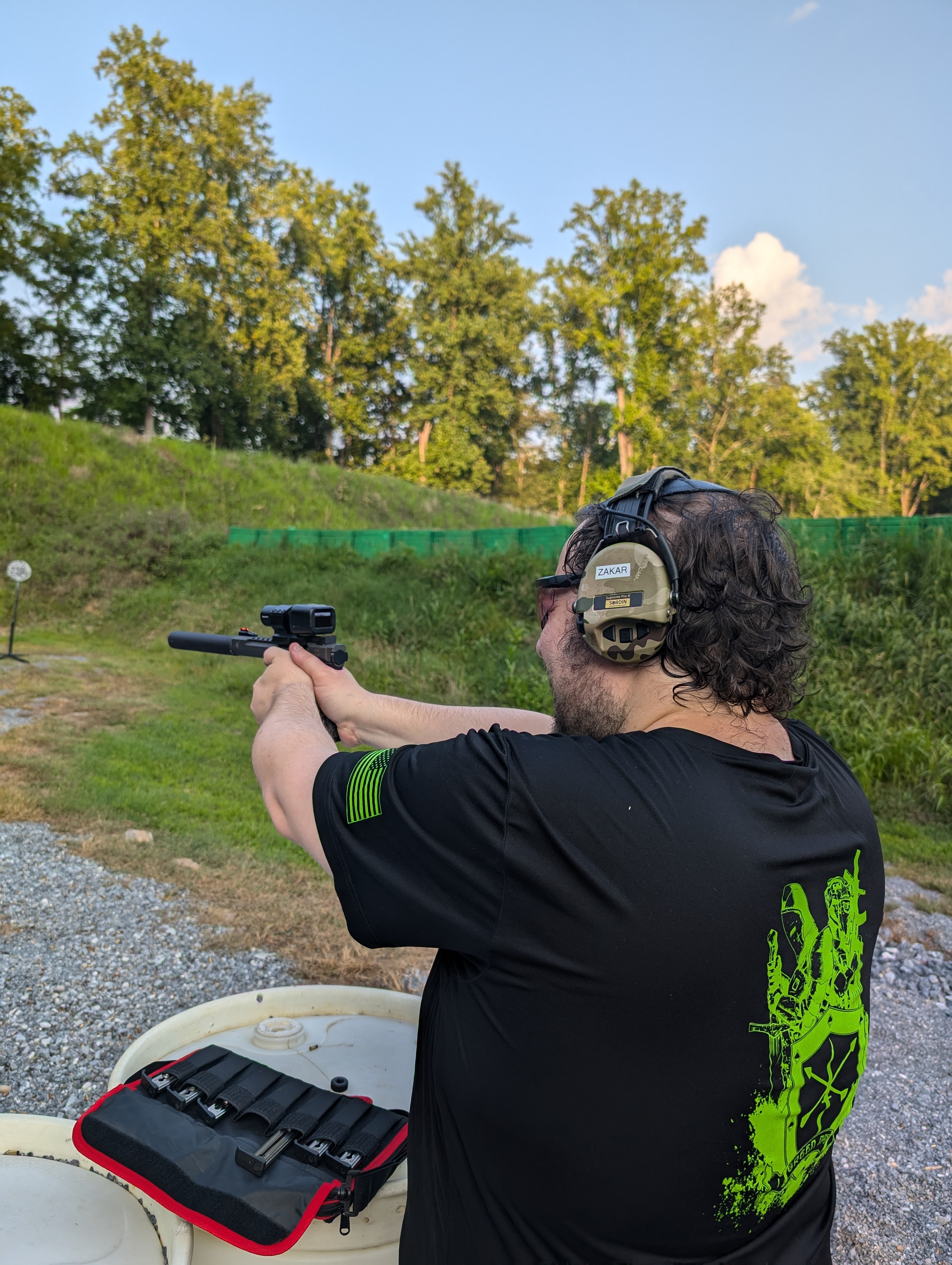
When I took it out to the range on a summer day recently, I had mixed results. It did seem to maintain zero, but it was really hard to spot the steel due to the poor NETD. Similarly, even when I slapped some toe warmers on the steel, it didn’t do much to improve visibility because the ambient temperature was so high. I suspect I would have better results in the winter. The poor refresh rate was problematic, but not a deal breaker unless you’re looking for a really high performance solution.
All in all, it was an interesting experiment, but I suspect that this is a case where the raw technical limits of the HS1 (screen resolution, thermal resolution, and NETD) conspire against it a little too much. As a handheld solution, though, it’s really quite convenient and useful, and might make a solid addition to a bug out bag or a plate carrier.
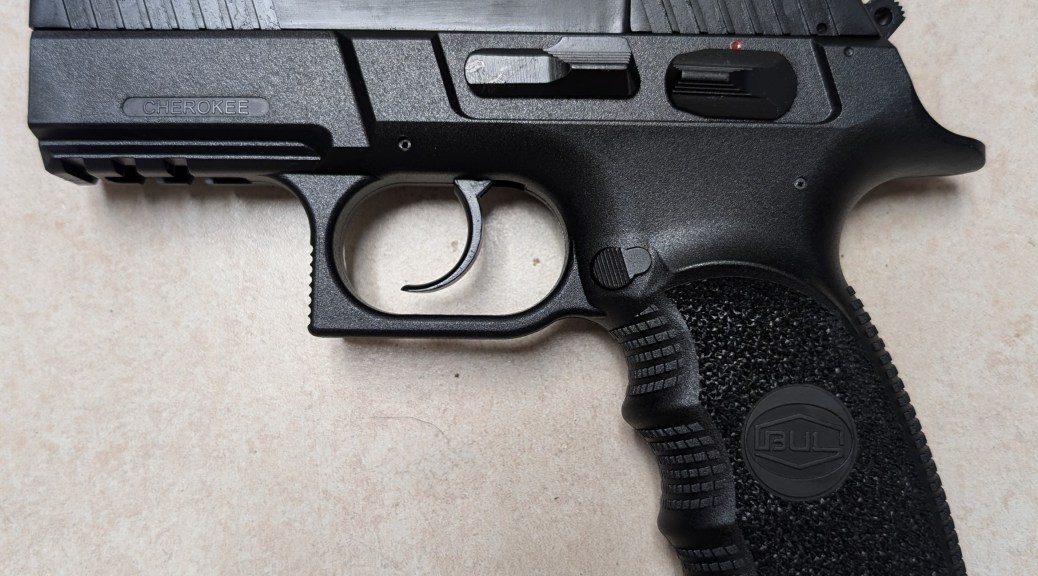
It’s a fact: I am a sucker for a good Israeli pistol. I’m sure when my kids are dividing up my collection and trying to figure out why the heck I own some guns, they’re going to wonder why I just had to have all three generations of the Cherokee Compact. The answer is curiosity, mostly.
If you’re curious about what I thought of the Cherokee Compact gen3, read on…
Did you see my review of the GL4 Pro and go “yes, but only if it could perform Lasik surgery, too?” Well, RovyVon has you covered now.
The GL4 Pro XL is out for $500 right now. The GL4 Pro FP is out in May for $800. I won’t comment on the legality of these solutions, but will note that the GL4 Pro is more than adequate for most pistol range tasks, especially at night or indoors.
I’ve been off the night shooting circuit for a couple months due to work and family priorities, but I have finally been able to get back out and shooting recently – and I still love it!
I have been somewhat vocal in my questioning the utility of IR lasers and illuminators on handguns with reflex sights, but readily admit that they are quite a lot of fun to use. Further, if your reflex sight does down or comes loose, the lasers do provide a backup aiming method. Thus, even though I don’t necessarily think they’re a must-have, I’d still recommend them for anyone doing a lot of night vision shooting.
However, giving up your white light is not a great solution, either – so the preference would be a device that could combine both VIS and IR needs into one package. Surefire has this in the form of the XVL2-IRC, which is $1200. RovyVon, an EDC flashlight manufacturer, has come out with a close (but not exact) copy for $300 called the GL4 Pro. I’ve finally had time to test it, and I’d love to tell you what I think.
While the blog has certainly branched out in terms of what it covers, I remain very interested in Israeli guns. One of the interesting parts of covering this subject area is discovering when things you didn’t think existed… actually exist.
In this case, the gun in question is the BUL Cherokee “Mini” Gen 1, which I acquired off a very popular auction site. You’ll recall from previous discussion that there are actually multiple generations of the Cherokee, with the first generation being a fairly straightforward licensed copy of the Tanfoglio Force polymer pistol. What sets apart the Cherokee Mini from the Cherokee and Cherokee Compact is the use of a compact (but not subcompact!) frame.
I like to experiment with oddball concepts, and while I freely admit that many (most?) don’t work out, I always learn something along the way.
My latest acquisition is a Meprolight Foresight optic. For those of you with short memories, this is a digital reflex sight that came out a few years ago. You configure it with an app, there’s a compass and level in it, there used to be a shot counter, etc. Unfortunately, it oozes unrealized potential because they never got around to adding features like custom reticles, configurable BDC, and so forth.
Anyways, one cool feature of the Foresight is essentially that it stores multiple zero configurations in the app that can be uploaded to your sight. This has obvious application for .300 BLK where supers and subs can have somewhat different zeroes. Being able to adjust zero for my chosen ammo with a few clicks seems nice. How can I leverage this on my night-fighting .300BLK gun? Will it work with NV?
A thing I struggle with is the balance between cost and training. 22lr is really good for some things. Gun handling, transitions practice, ready-ups, long-range-at-short-range, etc. I spend a large part of my year shooting 22lr with the kids on a regular basis. A hundred rounds of 22lr is a bit over five bucks (at current prices). A hundred rounds of 223 is more like $25 (if I reload it).
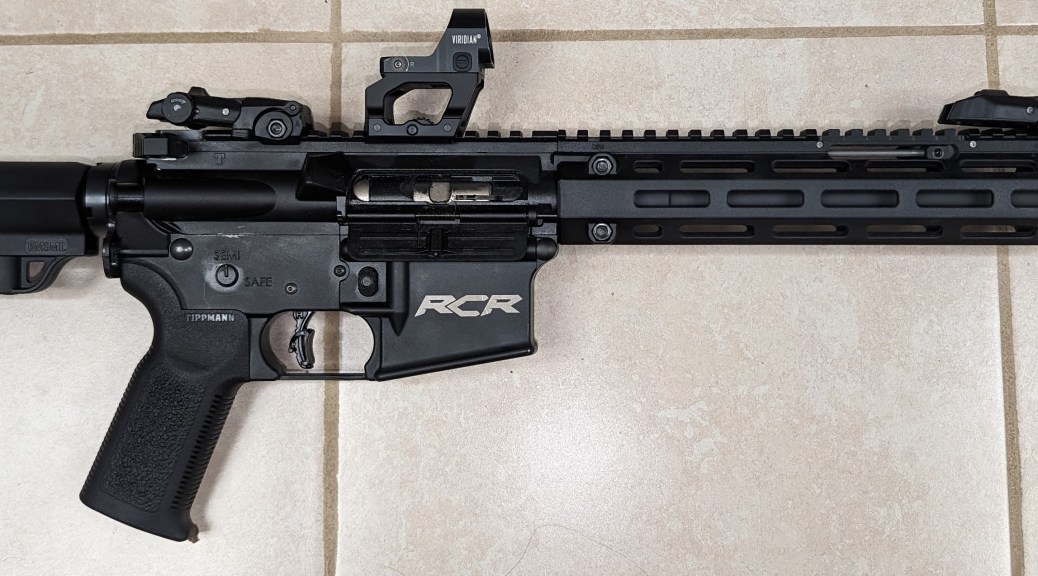
I shoot a fair bit of outlaw falling steel, and a gun with a reliable high-cap magazine would be terrifically useful for that. Given that I have an M4-22 Elite, being able to use my mags with it would also be great. Enter the Tippmann M4-22 RCR.
You’ve seen me doing a lot of night vision related posts lately, mostly because that’s a shooting trend I’ve been deeply investing in. I still shoot competition as much as I can, but getting out to night vision shoots is a big priority for me now, too.
In my personal opinion, if you’re shooting with night vision, you need an “active” option for aiming. Passive is great, and I practice it often, but if you need to shoot on a cloudy night with no ambient IR to fall back on, you’re going to need to generate your own IR to see what you’re aiming at.
One budget option that has recently come to market is the SMSLaser XK68-IR. This is a ~$160 MFAL that provides visible laser, IR laser, and IR illuminator capabilities. I mounted it up on my AR-9 (running Maxim Defense Roller-Delayed Buffer) to see how it would work out.





 The Hebrew Hammer